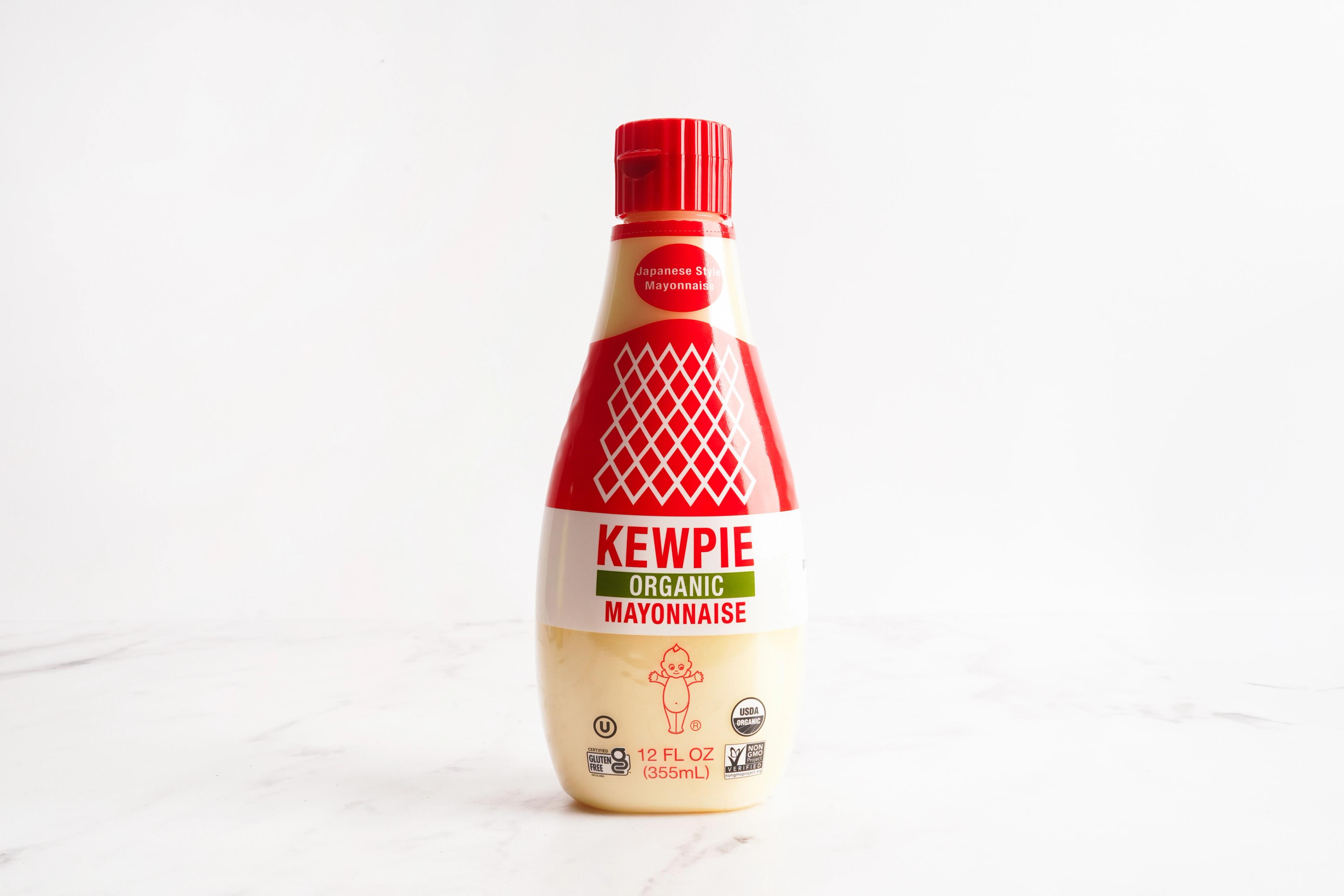
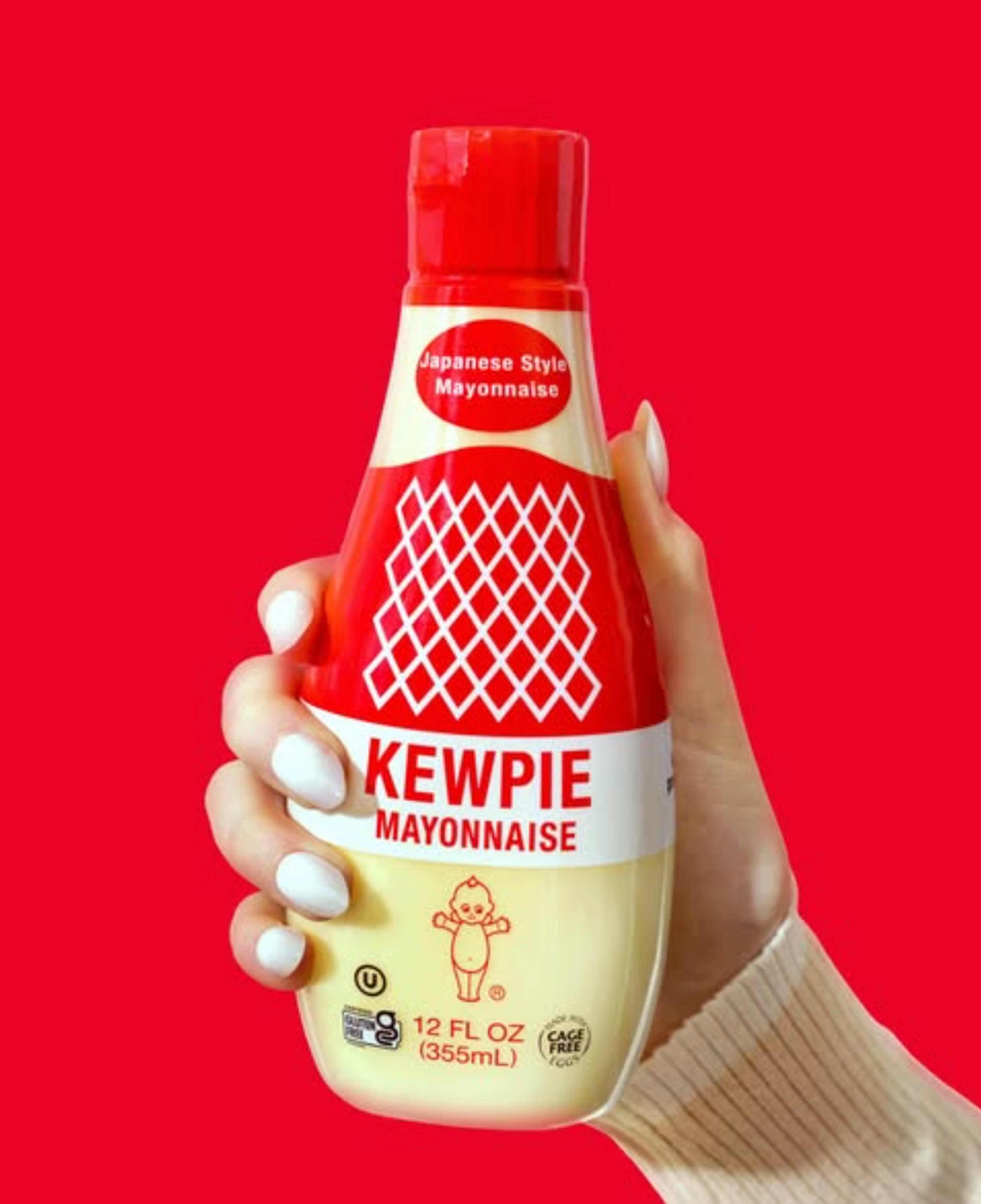
In the 1910s, Toichiro Nakashima spent several years in the United States and United Kingdom as an intern with Japan's Ministry of Agriculture and Commerce, where he first encountered mayonnaise and came home convinced of its potential. In 1925, he launched Kewpie Mayonnaise, Japan's first commercially available mayo, with a recipe built on egg yolks rather than whole eggs, seasoned with rice vinegar and MSG. The name came from the Kewpie doll, a popular American cartoon character whose Japanese rights Nakashima purchased, and which became one of the most recognized brand marks in the country. When wartime ingredient shortages made ethical production impossible, Nakashima halted manufacturing entirely rather than compromise on quality, resuming in 1948.
The yolk-only formula is still what separates Kewpie from every other mayo on the shelf. Egg yolks alone produce a condiment that is denser, richer, and more intensely flavored than whole-egg mayonnaise, with a tangy, slightly sweet vinegar profile and a depth of umami that makes it function almost as a seasoning as much as a spread. It has held the top position in the Japanese mayonnaise market since its launch, and has become a staple in kitchens around the world, used in everything from sushi rolls and okonomiyaki to egg salad sandwiches and dipping sauces.
Now in its second century, Kewpie has extended the recipe to be compatible with every kitchen without abandoning its founding logic. The organic formulation keeps the yolk-only approach intact, substituting certified organic egg yolks and organic vinegars throughout. The vegan formulation replaces egg with plant-based protein, developed to carry the same creamy texture and umami richness that define the original. Both are gluten-free and kosher certified. U.S. production takes place at a facility in Clarksville, Tennessee.